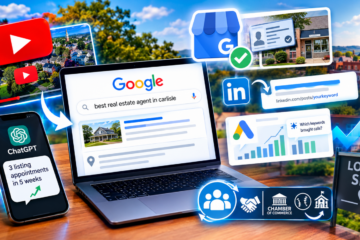
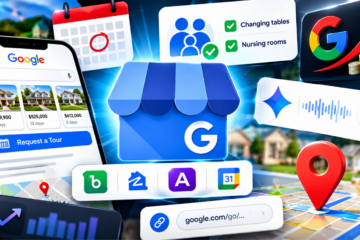
The AI-Powered Agent: 5 Surprising Shifts Moving the Real Estate Needle in 2026
Listen to Episode 95 of Google for Real Estate on Spotify
The real estate industry is currently drowning in AI noise, but as we move through the first half of 2026, the data has finally cut through the static. We are no longer debating whether AI will replace agents; we are watching it redefine what a “premium” agent looks like in the eyes of the consumer.
Distilled from recent expert analysis of Google’s 2026 ecosystem, here are the five shifts you need to master to remain the authority in your market.
1. The Defensive Alpha: Why Clients Search for an “AI Real Estate Agent”
Data from the first six months of 2026 is clear: “AI real estate agent” has surged to the number four top search term and the number two rising term in the category.
The strategy here isn’t just about efficiency; it’s about defensive authority. Clients aren’t looking for a chatbot to replace you. They are looking for a savvy human who “consults AI” to ensure no stone is left unturned.
The Strategist’s View: Mastery of these tools prevents “double-checking.” When you prove you are the master of the machine, clients stop running your advice through Gemini or ChatGPT behind your back to see if you’re right. Being “hip to all this stuff” builds a level of technical confidence that traditional agents simply cannot match.
2. Google’s “Zillow Killer” is a Buyer-Agent Capture Play
Google’s new “Home Search” ads have officially landed, integrating IDX feeds directly into the search results. But here is the critical nuance most listing agents are missing: Google is not sending these leads to the listing agents.
This is a massive capture play for buyer-side representatives. To stay in this high-intent lead mix, you must meet two non-negotiable technical requirements:
- Maintain an active Local Services Ad (LSA): You must be verified and currently running LSAs.
- Toggle on “Buyer Agent Services”: If you have niched down to “listings only” in your settings, you are invisible to this traffic.
If you want to grab market share from listing agents who aren’t tech-savvy, keep that buyer agent toggle active. It is the only way to intercept Google’s native search traffic before it ever hits a third-party portal.
3. The $5 Digital Transformation
Google has democratized professional-grade AI with its new $5 Gemini plan. For the price of a morning coffee, you are essentially hiring a high-level digital assistant.
Key benefits of the $5 tier include:
- 400GB of Storage: Ample space for AI notebooks and heavy creative assets.
- 2x Usage Limits: Significant bandwidth for the Gemini 3.5 Flash model.
- The Omni Model (Video Morphing): This isn’t just about generating video from text. The real “wow” factor for 2026 is editing existing footage. You can now take a video of a property and use AI to “morph” features; changing a home’s exterior color or adding effects (like a flaming basketball through a hoop) to social content in seconds.
4. The Yahoo/Yelp Search Blind Spot
While we obsess over Google, a significant slice of local search still flows through Yahoo, Bing, and Apple Business Connect. A surprising discovery in 2026 is that Yahoo is populating agent business profiles using Yelp data rather than Google Business Profiles.
STRATEGIC ACTION STEP: Optimize your Yelp profile immediately. Ensure your photos, contact data, and reviews are current. To dominate local SEO across the “non-Google” web, your Yelp profile must be as polished as your primary website.
5. Your New Morning Ritual: The “AI Inbox” and the Daily Brief
The most transformative productivity shift in 2026 is the death of the email folder. High-performing agents are moving toward the “Zero Sorting” philosophy. By leveraging Gemini’s AI Inbox, you no longer need to spend hours filing messages. The AI retrieves specific data, like a client’s login credentials or contract dates, across 50,000 emails instantly via natural language.
The Gemini “Daily Brief” (powered by 3.5 Flash) now acts as your morning COO. By synthesizing data from Gmail, Google Sheets (your CRM), and Calendar, it creates a high-level roadmap of:
- To-Dos: Reminders for “property checks” or client onboarding items.
- FYIs: Alerts for upcoming automated charges or recurring bills.
- Vibe Coding: Deep-linking to custom tools you’ve built (like bespoke scheduling apps) to streamline your specific workflow.
“It’s calling out to-dos and FYIs and things in one place… Once it’s dialed in, it’s a game-changer for focus.”
Conclusion: The Robot in the Window
The shift toward AI integration is no longer a future-looking theory; it is the 2026 reality. Think of the “robot at the open house” metaphor. The first agent in your market to have a robot in the window, perhaps a simple humanoid folding brochures or greeting guests, isn’t just using a tool; they are leveraging a viral marketing phenomenon.
The publicity of being a first-mover creates a “tech-leader” halo effect that traditional advertising can’t buy.
When the first robot-assisted transaction happens in your market, will you be the one operating it, or the one wondering where your leads went?